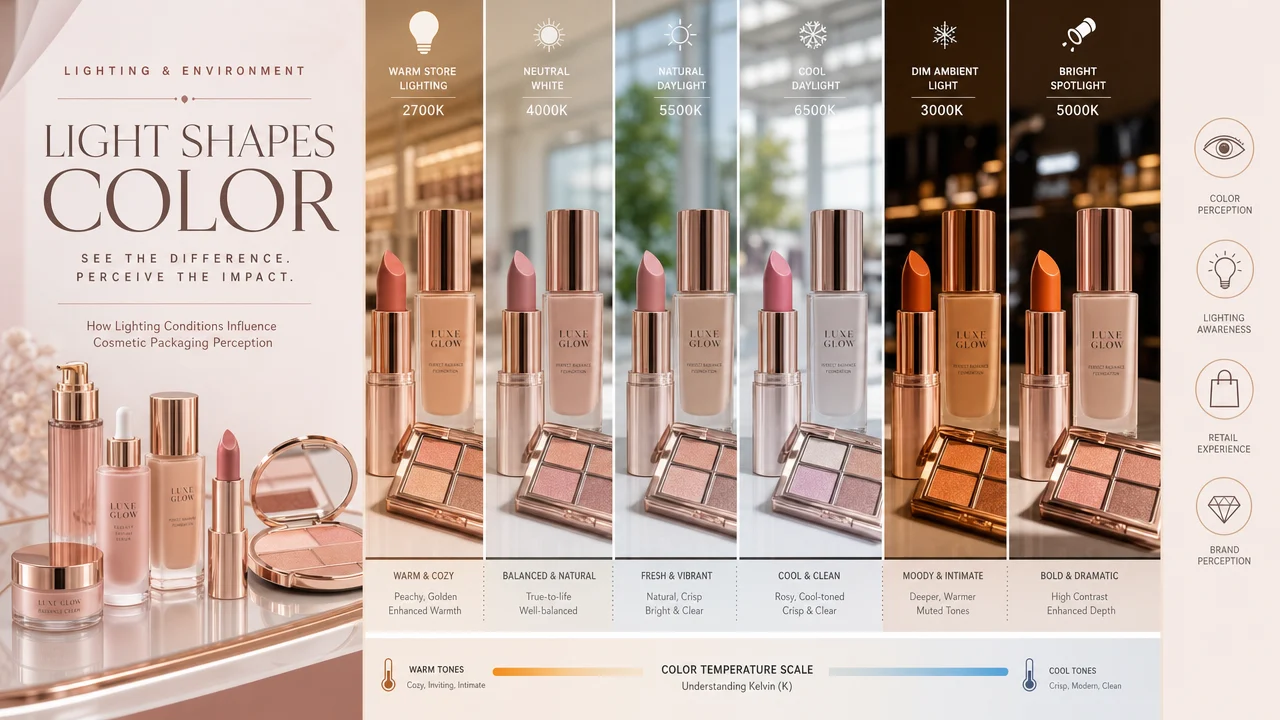
You approved the perfect packaging color in the lab—but in-store, it looks completely wrong. Why? The answer lies not in the pigment, but in the light.
Color perception is highly sensitive to lighting conditions. Packaging that appears accurate under daylight or D65 light sources may shift hue, saturation, or brightness under warm retail LEDs or fluorescent lighting. This phenomenon, known as metamerism, is a major cause of color mismatch complaints in cosmetics packaging.
Color accuracy in cosmetic packaging isn’t just about matching Pantone or using the right resin. It’s also about how and where the color is evaluated.
If a buyer approves color samples under neutral daylight but your end-consumer views the product under artificial light, the same packaging can appear warmer, cooler, more saturated—or entirely off-brand. This lighting-induced shift is one of the most underestimated causes of costly rework and lost consumer trust.
How Lighting Affects Color Perception
Color is not an inherent property of an object. Instead, it’s a visual experience shaped by:
- The light source (its temperature and spectral power)
- The object’s surface reflectance
- The observer’s eyes and brain
In technical terms, color is the result of illuminant + material + observer.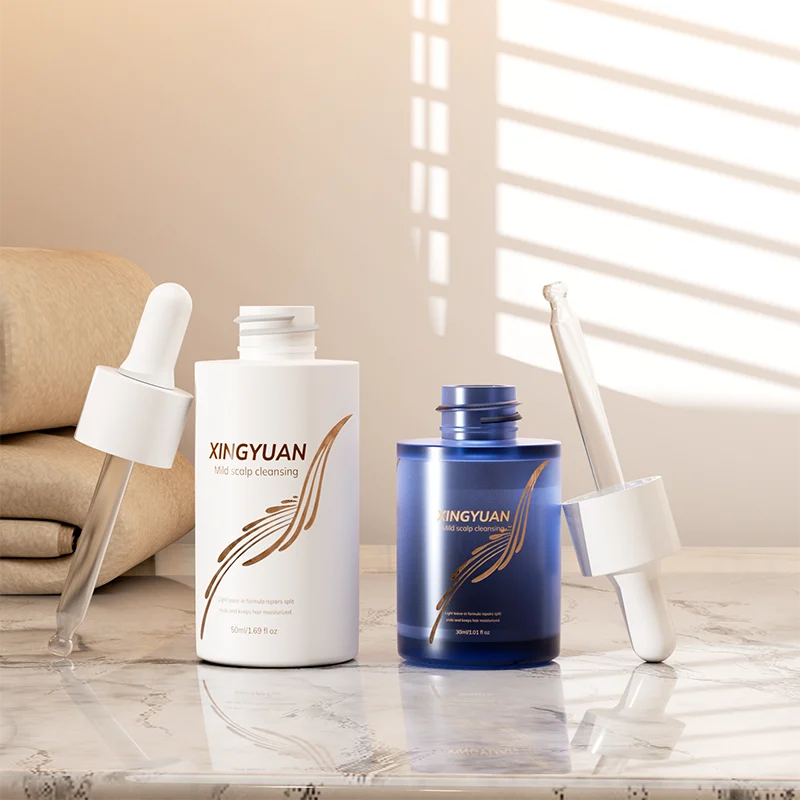
Two pigments with different spectral curves may appear identical under one light source, but noticeably different under another. This variability creates a phenomenon known as metamerism.
What Is Metamerism?
Metamerism is when two color samples appear the same under one light source, but different under another. This is especially problematic in packaging when:
- The sample was approved under D65 lab lighting
- Production occurred under LED lights in the factory
- Products are sold under 3000K warm lighting in-store
Metamerism is common with subtle tones (e.g., beige, nude, pastel), metallic finishes, or translucent plastics. Even minor hue shifts can create visual inconsistencies across a product line.
Common Lighting Types and Their Impact
Understanding how lighting shifts perception is key to controlling packaging appearance across environments.
1. D65 (Daylight Simulator)
- Color temperature: ~6500K
- Used in: Labs, color matching booths
- Effect: Neutral, balanced reference lighting
- Purpose: Industry standard for color approval
✅ This is the baseline lighting standard used in color control environments. Every supplier and buyer should use D65 when evaluating samples.
2. LED Lighting (Retail Display)
- Color temperature: 3000K to 5000K
- Used in: Department stores, cosmetic counters
- Effect: May enhance contrast or skew warmth depending on LED type
- Risk: Color may appear more yellow or cold than expected
LEDs are energy-efficient and customizable, but their spectral spikes may distort some tones—especially pinks, purples, and beiges.
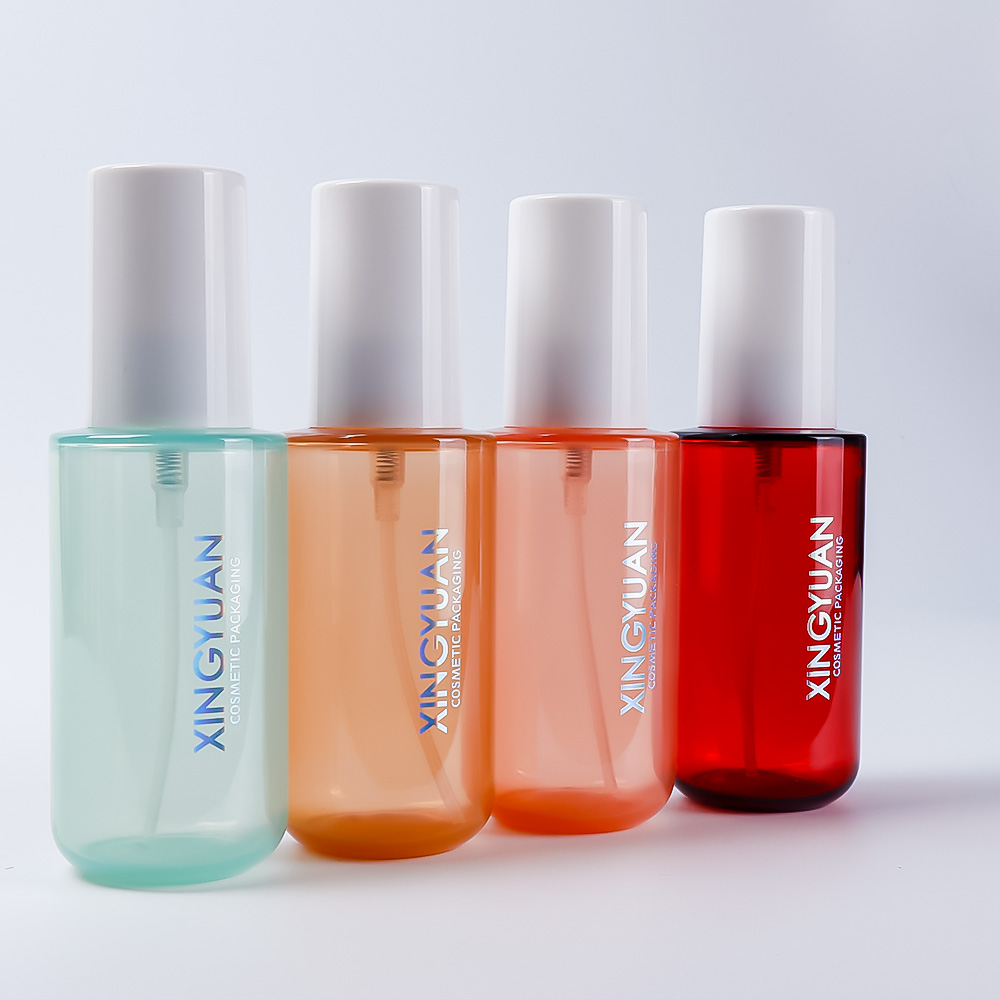
3. Fluorescent Lighting
- Color temperature: 2700K to 4000K
- Used in: Mass retail stores, pharmacies
- Effect: Flat, low contrast, slight green or blue cast
- Risk: Makes warm tones appear dull or grayish
Fluorescents can desaturate rich colors. Metallics or shimmer finishes may look muted or off-tone.
4. Natural Daylight
- Color temperature: Variable (depending on time and weather)
- Used in: Outdoor or indirect retail spaces
- Effect: Can be overly blue or overly yellow depending on conditions
While daylight is often used as a “true color” reference, it is uncontrolled and not reproducible in labs. It’s valuable for reality checks—but not for approvals.
Real-World Scenario: A Costly Color Misalignment
A premium skincare brand approved its bottle color under D65 lighting at the supplier’s lab. The final product looked flawless in pre-shipment QC. However, after launching in 3000+ retail outlets, complaints surged:
“Why does this bottle look beige in stores when it looked soft pink in our samples?”
The answer: store lighting was warm LED, and the original pigment formulation was sensitive to spectral shifts. The brand ended up:
- Pulling inventory from key locations
- Reprinting marketing materials
- Reworking the color formulation (added $18,000 in development cost)
How to Standardize Lighting in Packaging Color Evaluation
To avoid these expensive pitfalls, packaging teams should establish a standardized color evaluation protocol that controls for lighting variables.
1. Use a D65 Light Booth for All Approvals
Every sample must be reviewed in the same light source—D65, ideally using a calibrated viewing booth.
2. Simulate Key Retail Lighting
If your products will be sold in Sephora (cool white LEDs) or drugstores (fluorescent), test packaging under those specific conditions using multi-source viewing cabinets.
3. Evaluate in Context
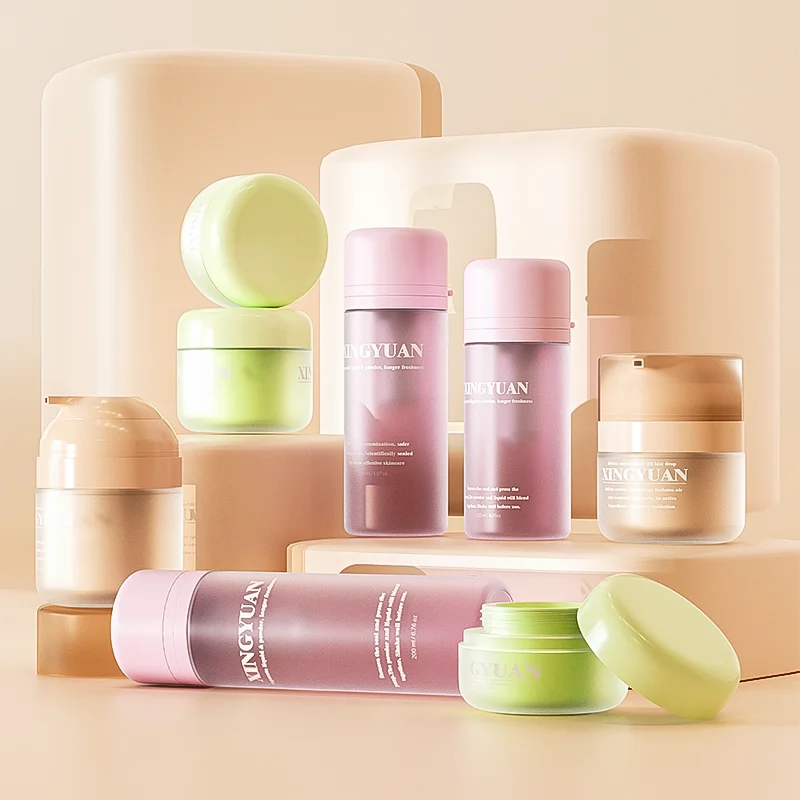
Place the packaging next to other SKUs from the same line to ensure visual consistency in multi-unit displays.
4. Document Light Source in Color Approval Protocol (CAP)
Every color approval should include:
- Light source name (D65, LED 3500K, etc.)
- Lightbox model and settings
- Observation angle and environment
- ΔE tolerance under all tested light sources
5. Avoid Mobile Phone-Based Approvals
Photos sent via smartphone introduce multiple uncontrolled variables:
- Auto white balance
- Screen calibration
- Ambient light interference
Never rely on photos or digital previews for final color decisions.
The Role of Suppliers in Managing Lighting-Based Color Risk
A capable packaging supplier should:
- Have a controlled D65 light booth onsite
- Provide multi-light source comparison photos or videos
- Include metamerism testing in QC reports
- Alert you when color shift is likely under LED/fluorescent lighting
- Offer real-time color correction during production runs
If your supplier lacks standardized light control infrastructure, your color approvals are inherently unstable.
Summary
Lighting is the invisible variable in color accuracy—and one of the most common causes of disconnect between brand, supplier, and consumer. A packaging color that passes approval under one light can appear unrecognizable in the store.
By proactively evaluating color under multiple controlled lighting environments—and building lighting parameters into the approval process—beauty brands can ensure their packaging looks consistently on-brand everywhere it appears.
Color is not static. Neither is light. Precision comes from controlling both.
Related Articles
- Why Is It So Difficult to Match Custom Colors for Cosmetic Packaging Bottles
- Pantone vs Plastic: Why They Never Truly Match
- How Different Packaging Materials Impact Color Accuracy
- How to Create a Color Approval Protocol (CAP) That Works
- Screen Printing vs. Full-Body Coloring What Works Best for Consistency